Home Care and CDPAP in New York
- Last updated
- October 11, 2026
- Read time
- 6 min

Key points
- The Consumer Directed Personal Assistance Program (CDPAP) lets Medicaid pay a caregiver you hire, like an adult child.
- In 2026, people 65 and older can get Medicaid with up to $1,836 a month in income and $33,038 in savings.
- One company, Public Partnerships LLC (PPL), pays every CDPAP caregiver at least $18.65 to $20.65 an hour in 2026.
If you're new to this, start with in-home care through Medicaid.
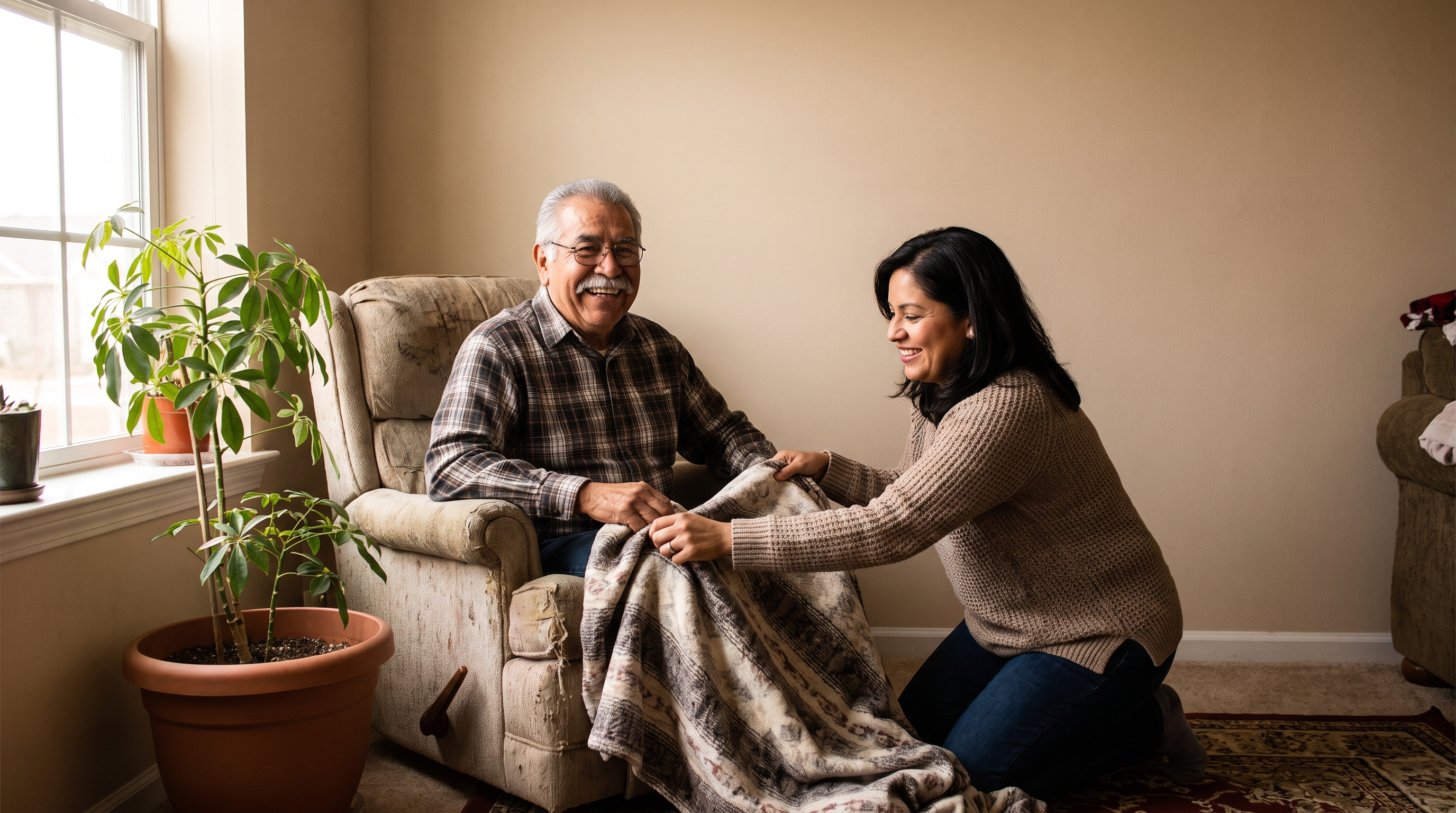
New York Medicaid can pay an aide, or a caregiver you pick, to help you at home with bathing, dressing and meals. The New York Independent Assessor checks how much help you need, then your plan or local Medicaid office sets your hours. If you're caring for a parent before and after work, CDPAP may let you get paid for it.
You may qualify if
- You have New York Medicaid, or can get it. At 65 and older, the 2026 limits are $1,836 a month in income and $33,038 in savings, the Department of Health says.
- You need hands-on help with 3 or more daily tasks, like bathing, dressing or walking. With dementia, needing someone to watch over you for 2 is enough.
- Your health is stable enough for care at home.
If your income is higher, the Excess Income Program can still pay for home care. It works like a monthly deductible, the Department of Health says.
Not sure you qualify? Apply anyway, because the state's assessor decides after a nurse sees you. A Pair Team advocate can walk through it with you in one call.
Your two choices
| Option | Who gives the care | Good fit if |
|---|---|---|
| Personal care (home attendant) | An aide sent by a licensed home care agency | You want the agency to find, train and replace workers |
| CDPAP (Consumer Directed Personal Assistance) | A person you hire, often a family member or friend | You, or someone you trust, can hire and manage the worker |
A CDPAP caregiver can also do some tasks a nurse would do, the Department of Health says.
Who can I hire through CDPAP?
You can hire almost anyone you trust through CDPAP, like an adult child, relative or friend. Three people cannot be paid, the Department of Health says:
- Your spouse (husband or wife).
- Your designated representative, the person who manages CDPAP for you if you cannot.
- A parent, if the person getting care is under 21.
You, or your representative, hire, train and supervise the caregiver and find backup coverage. Your caregiver must register with PPL, pass a health check before starting and every year, and finish training within 90 days.
Pay depends on where the person getting care lives. Since January 1, 2026, PPL pays at least $20.65 an hour in New York City and $20.05 in Nassau, Suffolk and Westchester. In the rest of the state, it's at least $18.65, PPL says.
What changed in 2025?
One company pays every CDPAP caregiver. That's PPL, and its help line is 1-833-247-5346.
New applicants face a higher bar. Since September 1, 2025, adults applying for the first time must meet the minimum needs rule above. With dementia, your doctor signs form DOH-5821. If you had home care or a plan before then, the old rules still apply.
Do I have to join a Managed Long Term Care plan?
You must join if you have Medicare and Medicaid, are 21 or older, and need home care for more than 120 days. The plan then sets your hours. Plans can also pay for adult day care in New York when it's in your care plan. See Medicare and Medicaid together in New York.
Can Medicaid help make my home safer?
Yes, a Managed Long Term Care plan can pay for grab bars or a ramp, the Department of Health says. Ask your plan's care manager to add them to your care plan.
Two state grant programs also help, through local groups:
- RESTORE (Residential Emergency Services to Offer Home Repairs to the Elderly) pays for emergency repairs to fix a health or safety hazard. You must be 60 or older, own and live in the home, and earn no more than the area's median income.
- Access to Home pays for changes like ramps, handrails, wider doorways and roll-in showers for people with a disability. Owners and renters can apply, with income up to 80% of the area's median.
Find the group for your county on the Homes and Community Renewal list at hcr.ny.gov/grant-partners. For shower chairs and other bath items, see what Medicare pays for in the bathroom.
How to apply
- Get Medicaid first, because home care and CDPAP both need it. Apply at your local department of social services, or New York City's Human Resources Administration (HRA).
- Call the New York Independent Assessor at 1-855-222-8350 (TTY 1-888-329-1541) to set up your assessment. It's open weekdays 8:30 a.m. to 8 p.m. and Saturdays 10 a.m. to 6 p.m.
- Go to two appointments. First a nurse assesses you, then a doctor, physician assistant or nurse practitioner from the assessor's panel examines you. That person, not your own doctor, writes the order for care.
- Read your outcome notice, because it says whether you can join a plan or get home care.
- Ask for CDPAP if you want it. Your plan or local office sends the approval to PPL, and PPL calls you to sign up.
If you need care right away, call your local Medicaid office, not the assessor.
How to appeal a denial or a cut
You can appeal either one, and the steps depend on who said no.
If you're in a plan, ask the plan for an appeal within 60 days of the notice. To keep your hours while you wait, appeal within 10 days, or before the cut starts if that's later. If the plan still says no, you have 120 days to ask for a state fair hearing.
If the assessor or local office says no, ask for a fair hearing within 60 days. Call the Office of Temporary and Disability Assistance at 1-800-342-3334, or ask online.
For help with plan problems, call the Independent Consumer Advocacy Network, the state's home care ombudsman, at 1-844-614-8800.
What a Pair Team advocate does
Most New York families who call us are stuck between the assessor, the plan and PPL. This is what we do:
- Check if you can likely get Medicaid home care or CDPAP, in one call.
- Book the assessor visits and help you get ready, so the nurse sees a hard day.
- Help you set up CDPAP with PPL, and appeal if hours come back too low.
- Help with what usually comes with it: a shower chair or hospital bed, rides, food and utility bills.
An advocate is covered by Medicare if you qualify. It takes two minutes to find out.
Check if you qualify for a Pair Team advocate
Frequently asked questions
Can I get paid to take care of my parent in New York?
Yes, you can get paid to care for your parent through CDPAP, if your parent has Medicaid and qualifies. You get paid through PPL, as long as you're not their designated representative. For breaks, training and support groups, see help for family caregivers.
Does Medicare pay for CDPAP?
No, Medicare does not pay for CDPAP, because it's a Medicaid program. Medicare pays only for part-time skilled care at home, so apply for Medicaid.
Do I have to change caregivers because of PPL?
You don't have to change caregivers because of PPL. They just need to register with PPL to get paid.
How many hours a day can I get?
The hours you can get each day depend on your assessment. A plan for more than 12 hours a day gets an extra review by an independent panel.
Who does my yearly review?
As of 2026, your plan or local Medicaid office does your yearly review, not the assessor. They also handle requests for more hours.
Sources
- Consumer Directed Personal Assistance Program (CDPAP), New York State Department of Health
- New Minimum Needs Requirements for PCS, CDPAS and MLTC Eligibility, New York State Department of Health
- Medicaid Excess Income Program, New York State Department of Health
- New York Independent Assessor Program, New York State Department of Health
- MLTC Partial Capitation, New York State Department of Health
- MLTC Partial Capitation Model Member Handbook, New York State Department of Health
- New York CDPAP Frequently Asked Questions (personal assistant wages), Public Partnerships LLC
- NY Consumer Directed Personal Assistance Program, Public Partnerships LLC
- RESTORE Program, New York State Homes and Community Renewal
- Access to Home, New York State Homes and Community Renewal
- Grants Available Through Local Partners, New York State Homes and Community Renewal
- New York Independent Assessor Program helpline, NY Medicaid Choice
- Fair Hearings, Office of Temporary and Disability Assistance
- 2026 Income and Resource Standards for the Non-MAGI Population, GIS 26 MA/05 Attachment I, New York State Department of Health
- Income and Resource Limits for New York State Public Health Insurance Programs, NY Health Access (NYLAG)
- New York Independent Assessor Program, NY Health Access (NYLAG)
- Appeals in Medicaid Managed Care Plans, ICAN
About the author
Holly Cuevas
Lead RN Care Manager
Holly Cuevas is a registered nurse and a lead nurse care manager at Pair Team. Since 2022, she has helped patients after a hospital stay.
Read bio